

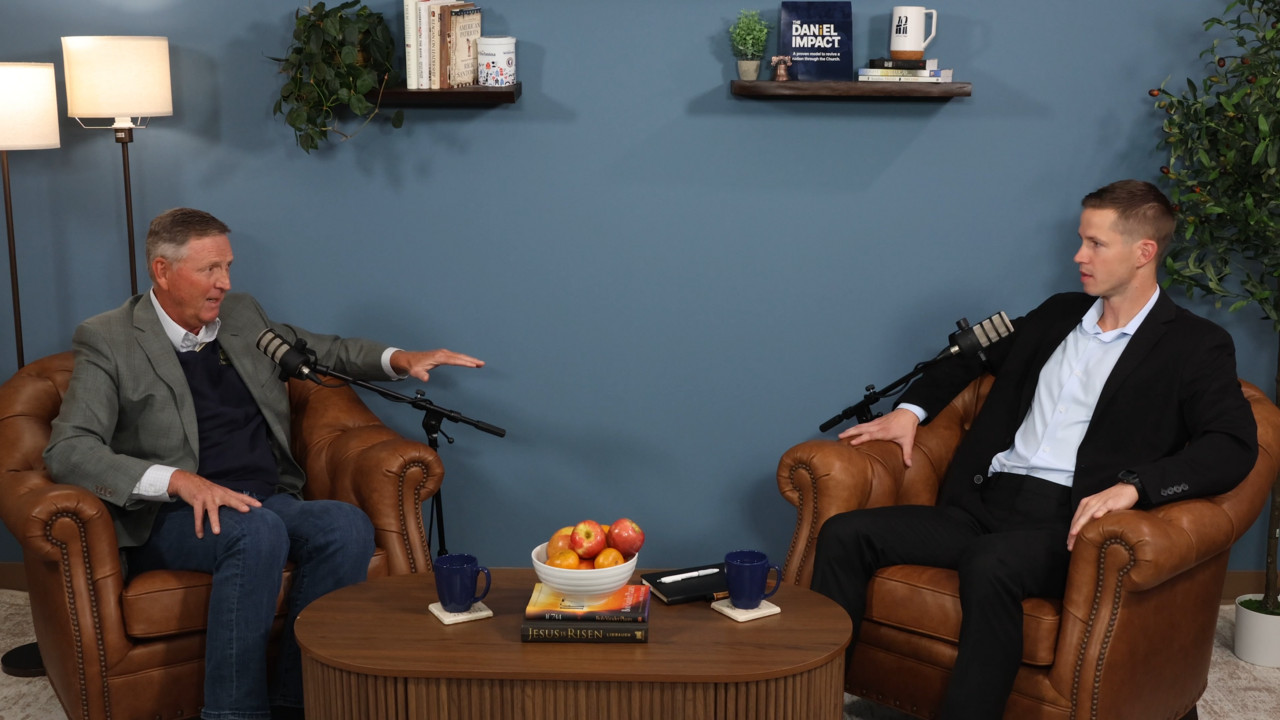
Meet Austin Stubbs! He is the candidate from Iowa House 45 who shocked everyone in the primaries because of how he took out an incumbent legislator 76-24. It is an inspiring story about what passion and hard work can do in grass roots Iowa.
If you liked this episode make sure to share it with a friend. If you or someone who know lives in District 45, make sure to share this with them! To learn more about Austin visit austinstubbsforiowa.com! We hope to see you at his event October 6th!
Episode Transcript
Bob Vander Plaats: Welcome back to All In to Win. I’m Bob Vander Plaats, president and CEO of The Family Leader, and I am so glad that you’re taking the time to join us today. So again, whether you’re taking a break from work, you’re acting like you’re working, or you’re out for a walk—whatever you’re doing—thanks for tuning in.
All the guests are special, but we have a special guest today. He comes from good stock. We’ve known his family for quite a while. His name is Austin Stubbs. Austin, welcome to All In to Win.
Austin Stubbs: Thanks so much for having me.
Bob: You know what, Austin? I thought I knew a lot about you. I really did. I thought, “Yeah, you know, this kid, he’s kind of a cut above.” We’re so glad that you decided to run for office. I knew of your family. Your family, as I said, I mean, they are as solid as they come. And so when you decided, “I wanted to get into public life,” I thought, “Let’s cheer this guy on.”
I had no idea that you were a stud—that you were a stud football player, that you played obviously in high school.
Austin: Yep.
Bob: Did you play for Des Moines Christian, or who’d you play?
Austin: Yeah, played for Des Moines Christian.
Bob: Des Moines Christian. Then you went to University of Northwestern Minnesota.
Austin: University of Northwestern.
Bob: Where they win football games.
Austin: They did when I was there.
Bob: I went to Northwestern College in Orange City. And I always differentiate the Northwestern in Chicago with the Northwestern in Orange City. That’s where we win basketball games and we win football games.
But you went to Northwestern in Minnesota, and then you went on to play professional football, huh?
Austin: I did. Yeah. Four seasons. I played four seasons in Europe and then coached for three after that.
Bob: Oh, wow. So what part of Europe were you in?
Austin: Oh, so I started in Istanbul, Turkey. That was my first—
Bob: Isn’t that crazy? Just a year ago—well, a year ago yesterday—Darla and I flew back from Istanbul.
Austin: Oh, nice.
Bob: Blown away by that. So, in the country—
Austin: Oh, yeah. It’s incredible.
Bob: I mean, Constantinople, it’s one of the most historical areas in the world. So I’m going down, you know, I’m just a guy from Runnels, and all of a sudden I’m surrounded by, you know, 20 million Muslim folks that don’t look like me, think like me, or act like me. And I’m like, “Wow, talk about culture shock.” But it was an incredible experience.
Austin: That was my first season. Then we went to Belgrade, Serbia; Wroclaw, Poland; southern coast of France.
Bob: What part of Poland?
Austin: Wroclaw.
Bob: It’s probably Wroclaw, so we’d probably say it like—
Austin: Yeah.
Bob: So how far from Kharkov would that be?
Austin: Oh, that’s probably about three and a half hours.
Bob: So, you know, a couple of places. Poland I found just fascinating.
Austin: Yeah.
Bob: I thought the people there were really hospitable, but Turkey the same way.
Austin: Yeah.
Bob: And I don’t know what you thought about when you were in Turkey, but when we were in Turkey, we were surprised that when they had the call to prayer, no one really stopped to pray.
Austin: No.
Bob: Everybody just like, “Well, I’m not so sure how serious—”
Austin: Exactly.
Bob: This is—but you talk about being a light in a dark place.
Austin: Yeah. Oh, yeah. I would say Europe generally, Christianity and religion overall is generally dead, from what I found. There might be folks who align or categorize themselves as Catholic or Protestant or Christian or Orthodox, but there’s not a lot of active, practicing Christians, or religion generally, over there, regardless of the country I was in.
And even Poland—you know, Poland is one of the more religious countries in Europe. But Turkey, when I was in Istanbul, I remember that first night, you know, the sounds. The song starts playing, and I’m like, “Oh, my goodness. What have I done? What have I done?”
Bob: Yeah. So what’s your best memory playing quarterback football?
Austin: Oh, wow. I’ve got to think of it all. On-the-field memory, probably—so Turkey was a really good one. But after my season in Turkey, I was invited to play on the Europe All-Stars team. It was the best imports. They call them imports—the Americans that they paid to come over—but also there was a handful of the top European players.
We flew down to Mexico City, practiced for three days, and we played the best team in Mexico. They practice all year round, so they beat us by, I think, three. But, oh, man, there were probably 40, 50 thousand fans in the stadium, hundreds and hundreds—probably 1,000 different armed guard cops just in case anything happened. It was a great environment, but that was probably my favorite game.
We played in the second—I played DB in that game. Second drive, I got a pick. I was just a little too slow to turn into a pick-six, but that’s all right.
Bob: Well, too slow. I played point guard, and I’d actually had professional teams looking at me to play in the NBA until they found out I was the only player that ever witnessed that got a three-second call on a drive.
Austin: Wow. Okay.
Bob: So that’s—
Austin: Been pivoting.
Bob: Really, really slow at that point.
So being at Northwestern and then choosing to go to Istanbul and to play professional over in Europe—Northwestern, obviously, Billy Graham has got roots at Northwestern College. Did you go with a mission mindset when you went over to Istanbul, into Europe, about how you could impact, how you could be a light into that culture?
Austin: You know, I was pretty—I would say the first two seasons, I was very focused just on football. I went there clearly just—I wanted to be a professional athlete. I was living the dream at some level.
But the last five seasons, I definitely went with more of a relational focus, is kind of what I tell people. I loved the relationships I was able to build there, connecting with folks from different backgrounds, different ways of thinking, being able to act and behave a little bit different.
They were curious why I was different, finding out eventually why I was different, and just relating on that level. Discipline on that level, and so many great relationships. And in every one of those countries, three or four just guys that we just got into the weeds with it. And that was—that’s why I would continue to go back.
Bob: What a great experience. So you came back to Iowa?
Austin: Yeah.
Bob: And came back home. So what drew you back to Iowa? Back home? I mean, obviously your professional days are probably over, but now, you know, coming back home, how was that coming back to Iowa after having that kind of an experience?
Austin: Yeah, it was—I mean, I love Iowa. I love where I was born and raised, and I’ve got a lot of roots here. There’s nowhere else I’d rather be.
And, you know, every season you’re there for four, six months, then you come back and you’re a free agent. So every time, I look forward to coming home and being home. A lot to look forward to. I’m blessed in that way.
But yeah, it was just time to settle down, establish some roots, and see what the next chapter of life brought for me. And boy, I’m glad I did. It’s been quite a journey that we’ve been on, but I’m excited for the future as well.
Bob: So before we go into the politics, what did you do when you came back? How did you work in the family business?
Austin: So every pretty much every season I came back, I was working in the family business, which was great. You know, my grandpa started that business—construction.
Bob: Right.
Austin: Yep, home building, and really did a lot of work in the East Polk County area—Altoona, Mitchellville, Bondurant. And then the next generation, my dad, kind of took it to the next level with land development. And then my brother is now the third generation doing the engineering.
So each generation adding a level. It was fun to kind of work and see the family business from the inside. But since I’ve been back, I worked for three years in the nonprofit space—Meals from the Heartland, everyone knows the meal packaging—and then Safe House for survivors of human trafficking as their development director.
Bob: Oh, good for you. Well, we’re thrilled to have you back in Iowa. Tell me what your family thought, though, when you said, “Then we’ll run for public office.”
Austin: Oh, absolutely not. They said, “No. I’m not doing that.”
Bob: No, yeah, for sure.
Austin: I mentioned, I was like, “You know, guys, I’m just not sure what’s going on here. I don’t like what I’m seeing. I think we’re losing our culture. I need to get involved in some way and try to make a change.”
And they’re just like, “Yeah, you can do it other ways. You know, stick with the nonprofit stuff.”
And then with Meals from the Heartland, I did an interview. We were doing a meal-packaging event, and I think it was WHO, and they were doing an interview. And I just—I did a good job on the interview. I showed it to my family, like, “Oh, that was so good.”
“Yeah, you should go into politics. Go. Go. Run.”
“Okay, that’s what it is. Just one good interview.”
But, you know, they’ve been behind me ever since, and I couldn’t have done it without my family’s support.
Bob: You know, when we are talking about you when you’re not in the room, okay, we’re talking to other people. But a comment that Chuck Hurley will say a lot—you know, this guy was green as grass, meaning no experience running for public office before. You’re taking on an incumbent in a primary in a pretty solid district for Republicans.
You had to make the case. So what was it? You know, “I’m going to take on this incumbent and I’m going to give the people of this area a choice of who they want to have serve them or lead them.” What was it?
Austin: That was kind of that Popeye moment. That’s all I can—”I can’t stand, can’t stand no more. I’m running.”
Bob: Yeah.
Austin: So my family has so many roots to East Polk County. I knew that if we got out there, people would recognize—have some name recognition. But also because of that, I knew the people of East Polk County. And, you know, the district does encompass North Polk County a lot as well, but especially East Polk County.
I knew they wanted conservative values. I knew the values that I had aligned with them, and I knew that they wanted a representative—or I believed, at least, that they wanted a representative that was going to reflect those values.
My actual last moment was I had a friend who recommended that I meet with Representative Lohse, hear him out, and see what he had to say about a number of the issues and then make a decision after that when I was considering it.
So I met with him, and I heard his answer to a number of the issues that we disagreed on. And at that point, you know, I walked away knowing, “This doesn’t reflect my values. I think that the people of District 45 would appreciate someone who reflected their values more,” and just decided to run.
Bob: Yeah, I think so. What we really respected about you, and still respect about you, this wasn’t like some animus against Brian Lohse as a person. There’s—you know, you and I, we just disagree. And so, therefore, since we disagree, I’m at least going to give what I believe is an option to the Polk County voters, East Polk County voters, to make a decision here.
And when you’re out door-knocking, because people say, “You know what? This kid, he stayed on message. He worked hard. He did all the things you’re supposed to do if you’re going to win.”
What were kind of the aha moments for you as you’re running for state representative?
Austin: Yeah, I think—and you mentioned it, staying on message. You know, obviously Brian’s well known, especially in the Bondurant area. And I would knock on a number of his friends, personal friends, or family friends’ doors.
You know, I wasn’t there to talk bad about him in any sort of personal way, or his family at all. It was staying on message. And I think, more than likely, those folks were going to vote for him regardless, but I think they appreciated that I was staying on message.
And I think, a couple months in, I realized the lane that I needed to focus on was being a well-rounded conservative.
Bob: I think so many times you have just social conservatives, you have just fiscal—
Austin: Well, one-issue voter.
Bob: Exactly. Yep, exactly.
Austin: And I think people wanted, “Okay, yeah, so you care about abortion. You care about the transgender stuff. But what about my affordability? What about the cost of living? What about parental rights?”
And so really trying to make sure that I was clear to the voters or to the constituents: I’m a well-rounded conservative. I care about all the issues, and I’m going to reflect that and not brand as just a red Republican. I’m a true conservative on all issues.
Bob: What I want the audience to understand is that the candidate you ran against, Brian Lohse, it not just an incumbent, but he had the endorsements of Terry Branstad, former governor, longest-serving governor in America’s history. He had the endorsement of sitting Congressman Zach Nunn, the endorsement of WHO radio talk show host wife April Conway. He had a lot of endorsements, and he had a lot of money. He put a lot of money into that race.
Was there every time you saw the endorsements, you saw the money, you saw the incumbent, were you like, “Austin, you know, let me talk to yourself. What am I doing?”
Austin: No, I don’t think so. I think even from the get-go—and people would say I’m crazy for this—once I learned there’s only this amount of people that vote in a primary, I knew that I could talk to every one of those people at least once. And that’s exactly what I did.
I said, “Here’s the difference. I believe you’re going to align with me, and I think I’m going to get your vote eventually.” That was my mentality going in.
And so even when all these big endorsements start raining in, and then FanDuel and DraftKings start dumping tens of thousands of dollars into the race late, you know, we just kind of stayed on message. We had set a plan so that, at least this was the vision, by February 15th, the election was going to be won. I would have already reached everyone I needed to reach at least once, shared the message, gained the support, and that everything after that was just coming back through again, reconfirming support, having maybe a little bit slower or longer conversations about their kids or whatever else, just building that relationship or cultivating that relationship.
And that’s exactly what it was. February 15th, we had hit the entire primary base—everyone that had voted in a primary in the last, I think, four, at least three election cycles. And the last few months was simply just relationship cultivation.
Bob: I love it. And for those of you watching right now, if you ever thought about running for public office, he just gave you a campaign school. It just takes hard work. Stay on message. Feel called that you need to be in the race. Don’t waver. And you had targets.
I want to make sure I get—how did The Family Leader, how did a guy like Chuck Hurley and others, Josiah Olson and others, how did they come along your side? How did they help you?
Austin: Well, in a tremendous way. Especially Chuck and Josiah were instrumental the entire race.
I remember the first political meeting or conversation we had here at The Family Leader. Chuck said to me, “I didn’t know who Josiah was. He’s like, ‘You stick by Josiah. This is going to be your guy.'”
All right. You know, I’ll listen to Chuck.
And so actually, Josiah and I have become great friends. Could not have done this without him, and his advice the entire way was just absolutely instrumental. And then Chuck’s relationship the whole time, encouragement and support. Couldn’t have done it without either of those guys, for sure.
Bob: What I love about guys like Josiah—and Josiah and others like him—they feel called to do what they’re doing, and that’s to get good people, godly people who are going to pursue righteousness and justice at the legislature, to get them elected. But then they’re very analytical. They don’t lie to themselves. This is what’s going to take to win this race.
I think Chuck has called Josiah a stone-cold killer. He shoots bullets. It’s not a shotgun.
But you listen. I remember Josiah telling me, “This kid’s going to win because he listens,” and you stayed.
So election night results are coming in, and this race is over quickly. How do you feel?
Austin: Felt good. You know, the absentee ballot was the first number we got right off the bat, and we’re like, “Oh, okay, we’re looking pretty good. Let’s not celebrate too early.”
Bob: And that was—the absentee ballots were in your favor?
Austin: They were in our favor, yeah. I think it was like 150 to 50, something like that. And so I was like, “Okay, we’re in a good spot.”
But my mentality the whole race—and you guys know this—the last month, people are like, “Oh, chill out. You got the race won. Just, you know, go on vacation.”
And I’m like, “That was not the way I was raised. I was raised when you’re up in the fourth quarter, you step on their throat and you make sure that you win.”
And so that’s what we did in the primary.
Bob: This was going to be your next state representative. He’s going to—
Austin: No, keep going.
Bob: It was the same mentality that night. As every precinct that came in, I was like, “Oh, our lead is widening in every single precinct.”
“Okay, surely Bondurant, it’s at the end. We’re going to get crushed in Bondurant.”
“Okay, so, you know, stay focused, everyone.”
And you see Josiah starting to get a little smile. I’m like, “Stay focused, Josiah.”
Austin: I didn’t smile quickly, but—
Bob: Keep going.
Austin: Exactly.
Bob: And, well, sure enough, we won every precinct, and I don’t even think none of them were even close. I think the closest one was 61%. That was the lowest precinct we did.
So the final number, 762 to 470. And shout-out to Runnells and Four Mile. We won 83% of the vote in Four Mile and 89% of the vote in Runnells precinct.
Guys, this is unheard of. He’s taking on an incumbent, and he’s being outspent a gazillion to one—like eight to one, right, is what it was?
Being outspent, having all the endorsements against him, and, you know, even though you had good name ID because you’re family, he still was an incumbent state representative. So kudos.
Tell me, you coached in Europe as well. How did your coaching play in? Maybe it’s you being a quarterback as well, but also your coaching. How’d that play into a campaign like this?
Austin: Yeah, I think relationship building with your players that are all so much different, I think, helped a lot with door-knocking, especially because everyone that you knock on their door, everyone’s different. Everyone cares about something a little bit different.
And so, you know, as you’re coaching a team of 50, 75 guys, professional athletes, everyone’s a little bit different—building those relationships, but also learning what makes them tick, what motivates them, how to put them in the right spot to succeed, and, you know, how to lead a group of men.
And then even, you know, I coached some high school football as well. And high schoolers can be even more tricky than grown men. How do you motivate those guys, lead them in the right direction, but also the element of your assistant coaching staff?
And I think this was a huge play during the campaign. Your assistant coaches are going to have different perspectives, different advice, different guidance, and you have to discern what’s the best route to take. From, you know, how do we—what offense do we want to run? To how—what are we going to do for conditioning? What’s going to be our consequences for X, Y, or Z?
All of that, I think, established a great amount of discernment for me. And as I was in this race, I mean, you’ve got so many voices from so many angles saying, “This is what you’ve got to do. If you want to win, you’ve got to do this,” and being able to discern what’s the right path, I think, was absolutely crucial for the success in this.
Bob: So as we look ahead, a lot of people are saying the midterms are going to be tough. That’s tough on conservatives. Now, we believe your district, you’re going to be good. If we lose your district, it’s going to be a long night across the country. But we believe your district, you’re going to be good.
But since you knocked on all the doors, what are the issues that came up on a frequent basis? You’d say, “We need to focus on these issues if you’re going to win the midterm,” if you’re constantly—other candidates who are in tight races. Zach Nunn, Miller-Meeks, Ashley Hinson, Zach Nunn—and the list goes on across the country. What are the issues you heard from Iowa voters?
Austin: Yeah, it was kind of a shift in February of this year. It shifted. Prior, the biggest issue was the eminent domain topic. And all of a sudden, in February, everyone started talking instead about—about eminent domain, about data centers was kind of the two hot-button issues.
The overall theme, though, is affordability. I mean, we know this. People don’t like paying $4.50 for gas in the state of Iowa. And, you know, I think that’s their cost of living. They want to have the American dream. They want to have their way of life as well. How do we create that for them?
And now, do the younger generation want to have the American Dream? It’s the parents who want to see their kids have the American Dream.
Bob: I remember we had Frank Luntz at a leadership summit, and he was doing a panel like this with other high-profile people. But he turned to the audience and said, “How many of you have it better off than your parents had it?”
And the audience raised their hand. I mean, it was like unanimous. Everybody had their hand up.
He goes, “How many of you believe your kids will have it better off than you have it?”
And I’ve got to tell you, there weren’t a lot of hands going up.
That’s a problem. We do need to make Iowa more affordable. We need to make America more affordable.
What kind of leadership do you think you can bring to the State House to help that happen?
Austin: Yeah, I think the well-rounded conservatism way of thinking—not being focused just on one or two issues—I think is going to be huge.
I think also, when I talk about affordability, making Iowa families happy, keeping young talent in the state of Iowa, affordability is right there. But right next to it is definitely making Iowa healthy again.
I think if we want to keep young talent and families in the state of Iowa, we have to have clean water. We have to have clean food production. We have to have healthy school lunches. We have to get the chemicals and toxins and all that stuff out of our water and food.
We’ve got to fight the cancer crisis. I mean, we’re sitting here in the state of Iowa. We can’t swim in our lakes, we can’t drink our water, and we have the fastest-growing cancer rates in the world.
That is absolutely unacceptable. We have to make Iowa healthy again, get the dyes out of our food. I can keep going on and on about it, but this is crucial.
Bob: Well, there’s no doubt affordability is a major issue. The health issue, especially that you saw the movement that RFK had.
But in Iowa, my oldest son said to me, saying, “You know, Dad, we don’t have mountains, we don’t have oceans, and our climate isn’t always the best.” He’ll say, “And now you attach the highest cancer rate in the country?” Heels? And why would, you know, his wife and him and the kids—my grandkids—why would they stay here? Why wouldn’t they go elsewhere?
So it’s a big issue. We’re going to need leadership on that point.
How do you believe Christians can really have an impact in the public sphere, in the state government arena?
Austin: I think conviction and values and not folding when you can’t fold on your morality, on issues that come to morality. Those are the three things that pop into my mind.
How can you lead with conviction? Any issue that comes to the floor, any bill, any piece of legislation, it’s a simple no if there’s a lack of morality in it.
And I think that was one thing Governor Kim Reynolds said often in interviews that I heard: “This is immoral.” No. It’s just as simple as that.
And I think that’s how Christians can lead down at the Capitol and get quality of the legislation.
And I think Iowans are still filled with common sense, and they want authenticity. You know, we say a lot here, “You can fool a fool and you can kind of con, but you can’t kid a kid.”
They want the authenticity. So even if they don’t agree with you, if you’re authentic about where you stand, they’ll trust you. So I’d say keep landing on that.
Bob: So now, before Election Day and then when you get inaugurated into being a state representative, what are you doing now?
Austin: So I’m working with Susan B. Anthony Pro-Life America. We love a great partner of ours.
Bob: Yeah, great organization.
Austin: They love The Family Leader as Iowa campaign manager. So the main focus, you know, for the next 40-some days is making sure those midterms go well for us.
But the long-term vision is to make sure that Iowa selects a true pro-life leader coming out of the 2028 presidential caucus and sets the tone for the nation.
No issue is more important than this one. So I’m excited to be on the team and be on the ground with the grassroots folks, folks trying to lay the groundwork.
Bob: You know, Ron Paul was really known for right-to-work. That was his issue, right-to-work.
But I remember him at the University of Iowa. I was with him, and we’re doing a stop together. And he told the University of Iowa students, he said, “Listen, if I know where you stand on the sanctity of human life, I can almost guess we’re going to stand on every other issue, and you’re going to get those issues right. If I know where you stand—if you’re on the wrong side of sanctity of human life, most likely you’re going to get those issues wrong as well.”
So the sanctity of human life becomes a clarifier. And so really thrilled that you’re partnering with SBA and helping them lead that deal.
Austin: Absolutely.
Bob: How can we best pray for you? What can we do for you between now and then, and then when you’re in the legislature as well?
Austin: Just keeping the momentum going. You know, I am worried about this blue wave that’s going to hit Iowa. Like I think, as you said, we should—we should be fine. But just to continue to have protection and support from the community and all our volunteers, protection and support from them as well, and just keeping that energy and focus on November 3rd.
You know, I—I believe instead of going red wave, blue wave, since it’s [unclear] deal, I think Iowans, again, they’re threaded with common sense, with common virtue and value. They’re not sold out to crazy.
So I trust Iowans to make the right decision. But the only way you’re going to get crazy is if you stay home. So make sure that you get out. Let your voice be heard. Be that prophetic, be the timeless voice to the culture.
Bob: Austin, thank you so much for being on All In to Win.
Austin: Thanks so much for having me. This is great, and you guys got a great setup here.
I remember All In to Win. It’s all about, “Don’t let your testimony be disqualified for the prize.” You know, this is Paul in First Corinthians 9:24–27.
Bob: So until next time, make sure that you leave a five-star review. Share it with others. But do this: How can they—how can they check you out, Austin? How? If they want to know more about Austin Stubbs, how can they check you out?
Austin: Yeah, go to the website. Check out our social media, Austin Stubbs for Iowa.
Bob: Go ahead.
Austin: No, austinstubbsforiowa.com.
Bob: Yes, austinstubbsforiowa.com.
Austin: It’ll have a link to all our social pages. Check us out. We’re doing a really cool campaign fundraising event October 6th. It’s going to be at the family farm where I was born and raised.
We’ve got Attorney General Brenna Bird, we’ve got Bob Vander Plaats coming out, let’s go, and Adam Steen as well. So great lineup, family fun, great barbecue. So come on out for that. We’re going to have a fun time. We’re looking forward to it.
Bob: Austin Stubbs, make sure that you tune in next time to All In to Win. And again, five-star review. Share it.
Thanks for tuning in. God bless.