

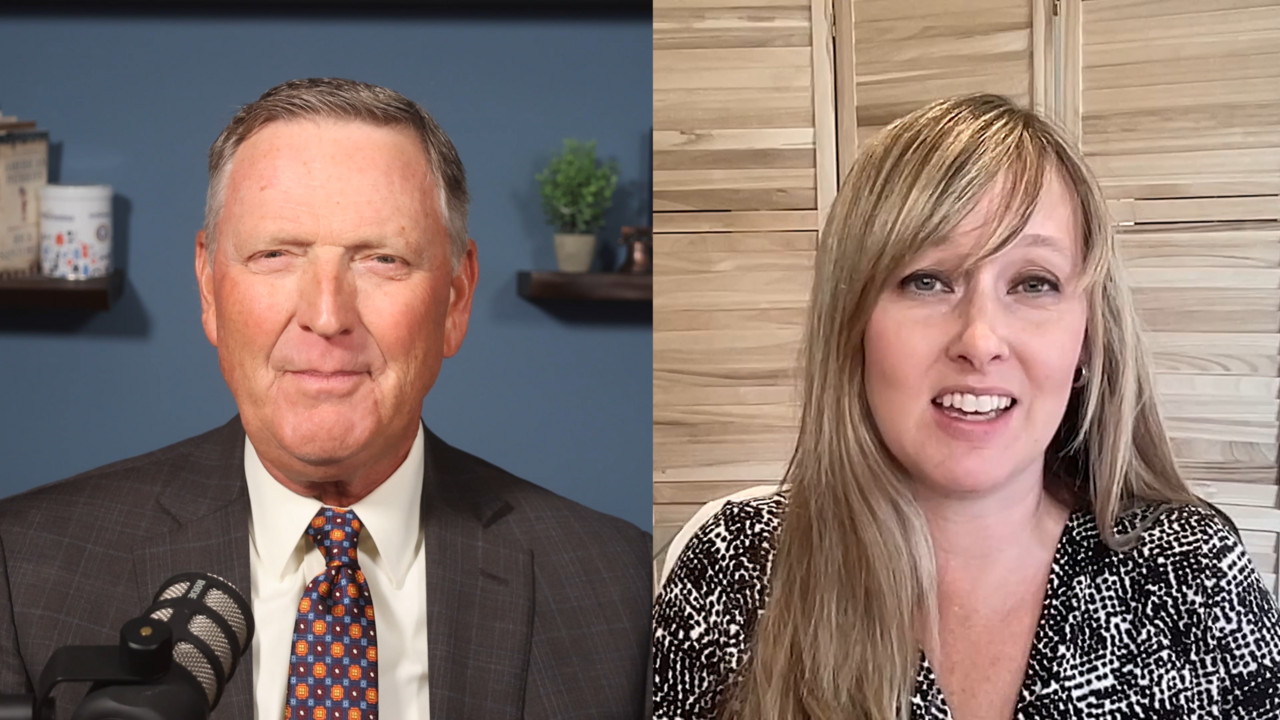
As the midterms are ramping up, it can easy for many political candidates to shy away from their positions. This week on All In To Win we have Kelsey Pritchard for SBA Pro-Life America to tell us exactly why they should not do this. There is data to support that when a candidate goes all in on pro-life, they actually win in higher numbers! Maggie is a great guest and is the perfect person to breakdown the pro-life movement as it pertains to the 2026 Midterms.
Share this episode with another friend who is also Pro-Life. Share this episode with someone who is Pro-Life but doesn’t think it is a winning issue. Or just share this episode with someone in your small group!
Episode Transcript
Bob: Well, welcome to another All In to Win podcast. We are so glad you’re joining us and tuning in from whatever you’re doing today. Whether you’re coming in out of the rain and having a hot bowl of soup or walking the dog or trying to hide this from your boss at work, we’re just glad you’re tuning in.
And today’s episode, you’re going to love. We have been so blessed by the partnership of Susan B. Anthony Pro-Life, and they have teamed with us actually for years, but very specifically the last couple of years on how we can synergize together to get pro-life candidates elected to advance a pro-life agenda. Because we do believe that every life has a purpose. Every day was ordained before one of them came to be. And so it’s just fun to be equally yoked with co-laborers in the movement.
SBA Pro-Life, obviously the largest pro-life advocacy organization in the country. And they have a lot of interest this year in the state of Iowa and some other key states as well. And joining us today is somebody you’re going to really like and enjoy, Kelsey Pritchard. Kelsey serves on their communications team at SBA Pro-Life. And Kelsey actually is our neighbor to the west in South Dakota. But Kelsey, welcome to the podcast.
Kelsey: Yeah, thanks for having me, Bob.
Bob: So Kelsey, for our viewers who may know Marjorie Dannenfelser and SBA Pro-Life America, but Kelsey, how did you get into this movement, and then what navigated you to work for an entity like SBA Pro-Life?
Kelsey: Well, I’ve been pro-life ever since I knew what the issue of abortion was. I had a middle school civics teacher who assigned me to do an abortion debate with someone and put me on the pro-life side. And I don’t think that teacher knew what they were doing, what they were starting. But I’ve been pro-life since then.
I’d like to say that I stayed pro-life because I became a Christian afterward. And I think that really grounded me in the issue. And the Bible is very clear on the issue. And I later led a Students for Life group at my campus that I was at.
And I went to work for the governor of South Dakota when I finished school, worked for him for several years, and then worked in the ad agency. And when I was in the ad agency, I became a mother, and we were actually living in Omaha, very close to Iowa, and my husband was in dental school.
And I had just seen the Unplanned movie, the story of Abby Johnson, if you know that. I’m sure your viewers have seen that. And it just broke my heart all over again for the issue. And I remember praying, “Okay, God, I don’t have a lot of free time in my life right now, and I don’t really know how you could use me in the fight for unborn human life, but please, please show me how I can be a part of this fight, and please put me into the abortion fight.”
And so I prayed that prayer. And years later, the whole Susan B. Anthony opportunity was just a God opportunity. It’s not something I was seeking out or looking for. It just kind of came right in front of me. And I truly believe that the work that I’ve done up until this point was just preparation to get into this fight for life after the Dobbs decision came down, and now as we work more together to save more lives from abortion in this critical time in our history.
Bob: Sounds like God definitely had a plan in your life all the way from the beginning of advocating for pro-life in a classroom to being moved in a movie theater and then becoming a mom yourself. Tell me about you and your husband. How many children do you have?
Kelsey: We have four kids. Our oldest is eight, our youngest is eight months, and it is awesome. I love having, it’s kind of a big family for us. My husband was an only child, and then I just have a little brother, and so it’s a lot of fun. We are never bored. I will say that there is endless entertainment in our home at all times.
Bob: Sounds like an awesome household. Darla and I, I tell my boys I want to have on my tombstone, “No regrets.” But I already have a regret, and that is Darla and I were blessed with four boys. I said I kind of wish we would have had a couple more because they’ve been such a blessing to us. And now the grandchildren coming, again, such a blessing.
And so it sounds like you have a busy household, but obviously pro-life is very instilled into you. Tell the audience, for those who don’t know, about SBA Pro-Life America.
Kelsey: Yeah, we call ourselves really the national political arm of the pro-life movement. And we exist to help win elections for pro-life elected officials who are running for office, but also to make a difference on the policy front nationally and also in the states.
And so we understand that there is a culture war on the issue of abortion and that there is a war to change hearts and minds, and that’s a very important part of the pro-life movement. But what was missing, I think, until the ’90s, until our group started and ramped up and became a larger group, was really that group that was just focused on the politics of it.
Because if you look at any human rights struggle in our country’s history, there’s nothing that’s been successful without political wins. And it’s very important what the law says and that we get to a place in our country where we’re protecting more unborn children and saving lives that way.
Bob: Yeah, well, we definitely want to be, you know, championing a culture of life. And we also say here, you know, that elections are policy, personnel is policy. Who you put into office is going to determine the policies that you get.
And a real example of that is, you know, when President Trump got elected in 2016 over Hillary Clinton. And the key thing there, so people can think what they want about Trump, and I don’t want to get into that, but he had to appoint three Supreme Court justices. And after the appointment of three Supreme Court justices, we got to see and witness the historic overturn of Roe v. Wade.
So tell me where you’re at when that took place, and what your thoughts were immediately when Roe v. Wade got overturned.
Kelsey: Yeah, it was one of those, like, I’ll always remember where I was moments, kind of like 9/11, but in a good way this time.
We had just moved back to South Dakota. I just started working as a marketing director for this company in Rapid City and was doing more like private sector marketing, but still very plugged in and interested in politics.
And I get a text. It’s early in the morning. I just get to work. I get a text from my dad saying, “We won.” And I’m like, “What? What did we win?” And I have to get online really quick. I went on Twitter, I think it was Twitter at the time, and I saw that it fell, that Roe v. Wade fell.
And we kind of knew it was coming, right? We thought it was coming based on the way we were hopeful, but you never know until, we didn’t know until we knew, until it actually happened.
And so all morning, I don’t think I accomplished much in that job because I was just texting people, you know, praying, thanking God.
And I had this thought in my head because, you know, it was an election year. Like, wow, the races in my state, especially for state legislature, now matter more than they ever have. And this issue is really going to have an impact on the election and who I elect as my state legislators, on all of us in South Dakota, our state legislators. It matters more than ever, and it’s really important that we get this right.
Bob: Amen. And when Roe v. Wade got overturned, I mean, all of us cheered, right? I mean, we’ve been praying for this for years. And I always pinch myself because God’s allowed us to have a front row seat when Roe v. Wade got overturned.
Now, there’s a lot of prayer warriors that have been praying diligently since 1973 to stop this awful practice. Roe v. Wade, a court makes a decision, you kill 60 million babies. They prayed and prayed and prayed, and we got to actually see the overturn of Roe v. Wade.
But with that, your base of supporters at SBA Pro-Life, our base of supporters at The Family Leader, we also fully understand that abortions have not ended.
What’s the next hurdle we need to clear? What’s SBA Pro-Life saying? Okay, abortions have not ended. Roe v. Wade is great to get overturned, but now what? What’s on the plate now to attack?
Kelsey: Yeah, and not only have abortions not ended, but they’ve gone up since Roe v. Wade fell. And I think that is the most gutting part of this and a shocking reality to people even in the pro-life movement who don’t realize that they’ve actually increased in our country.
And so there’s actually a lot of work to be done. We’re not even close to finished. Great big accomplishment, great big check mark with that Dobbs decision. But what we need to do is actually save lives, save more lives now from abortion.
And they have essentially gone up for really one big reason, and that’s mail-order abortion. And so you’ve got great state pro-life laws, like the heartbeat law in Iowa, but they haven’t been allowed to take actual full effect because of mail-order abortion.
The Joe Biden FDA under COVID allowed for abortion drugs to be sent in the mail to women. And the Trump FDA has not taken that rule off the books. It still stands today.
So that means that abortion drug dealers in blue states are mailing in abortion drugs to states like Idaho. And that’s the way that two-thirds of abortions are happening now, is through these abortion drugs.
And so our big priority is we need to end this mail-order abortion. If we would end this, it would save 15,000 lives a month because those pro-life protections in a number of states would finally be able to take effect.
And so that’s critically important to us. It’s also important to us that we’re pushing that we no longer be one of eight countries in the world that allows abortion until birth. We’re on that list with China right now. We’re out of step with all of Europe.
And so we really believe we need some sort of national minimum standard so that we recognize the consensus position in this country at least. I mean, we wish we could save every life from abortion in this country, but if we need to begin somewhere nationally so that babies who could survive in a NICU, babies who can feel pain, aren’t aborted in the United States.
Bob: You know, the late Lindsey Graham, who I know is a champion for you guys at SBA Pro-Life, he was a friend of ours at The Family Leader, but I believe his comment was always, “Whether you get to live or die should not be determined by the ZIP code you were born in.” And we fully, fully agree with that.
And there’s a lot of things that you talked about there that I want to get to, all of it. One is the mail-order drug, the abortion pill, mifepristone, the abortion drug coming into Iowa, even though we have a heartbeat law.
And obviously we were trying to push the Trump administration, the new FDA appointee, and Heidi Overton to say there has to be an in-person consultation, and all the side effects have to be openly communicated with the person who’s seeking an abortion pill.
We also think we should go a step further, not being just in person, but when the abortion pill is given to somebody, there should be a reversal pill given with it so that if she wakes up the next morning and has buyer’s remorse and says, “I want to, I don’t know why I did this, but I want this to stop,” at least she has a shot to make it stop.
And there’s a shield law of the states who are mailing these abortion drugs into a place like Iowa saying, “Well, you can’t come after us anyhow.” So there’s a lot that legislators need to do.
And then the other piece, and then we’re going to get to the election part, is the Roe v. Wade of saying we’re turning it over to the states. And a lot of politicians have used that more for cover than for advocacy.
We’re in an election year right now, the midterms. What are you looking for from pro-life champions? What are the words you want them, or what’s the message you want them to be communicating to the voters on the pro-life issue?
Kelsey: Yeah, I think it’s that, first of all, communicate on the issue because the consultant class has said that a Republican shouldn’t talk about abortion and that they should just, you know, focus on the economy. Don’t touch the social issues, which I don’t know if you filled your car with gas lately. That’s terrible advice in this election.
So we really need to energize the base. And we do know that Republicans can’t win without pro-life voters. That is 100% true. If one to two percent of pro-life voters had stayed home in 2024, we would have Kamala Harris in the White House right now.
And so you need your pro-life base. Now is the time to energize them. And we’ve done message testing that shows that this can be a really energizing issue for people.
And that if Republicans would just simply expose how extreme the Democrats have become on the issue of abortion, that sadly, the de facto position of their party is abortion until birth and forcing that in every state, nationalizing that with the so-called Women’s Health Protection Act.
That if you just simply expose that, the voters are pretty appalled. They’re pretty shocked. Even the people in the middle, even some Democrats, I’d say a lot of Democrats don’t want that, Democrat voters.
And so when you point that out, Republicans can actually shift the margin in their favor from four to five points. And so it’s not only the right thing to do to talk about this issue, it’s the smart thing to do, especially in this election.
Bob: You know, the life issue. I go back to Governor Reynolds, who’s been a pro-life champion for us, and she’s not running again, even though we wish kind of she was. She’s not running again.
But I remember in her 2018 debate, and they asked her, “Where’s the line in the sand for you?” And she was in a very close race at that point. Matter of fact, she was trailing the Democrat, her Democrat opponent, by three points.
And she said, “The line in the sand for me is the sanctity of human life. I will always stand for the sanctity of human life.”
And what that did in a very close race, I think it allowed Iowans to know we can trust you because if I can trust you on the sanctity of human life, I can trust you on the tax break for the blue bicycle, right? But if I can’t trust you on the sanctity of human life, why would I trust you on anything else?
So one is it’s a trust issue. It’s a character issue. Two is, though, you’re right, when all of the things that usually work in the favor of Republicans, the economy, are against us right now, inflation, interest rates, gas prices, you name it, it’s against us.
Well, now you need to get to your conviction voters, and the conviction voters are your pro-life voters. You need to mobilize them because it’s a very extreme position right now. We say common sense versus crazy.
Candidates are saying, and Governor Walz just signed it, abortion up to the time of birth. And we have a candidate here for governor, abortion up to the time of first breath, which means even after the birth, if that child has not breathed yet, you still can kill that child.
And so to me, this is a no-brainer for these candidates to embrace it, to lead with it, to get the people energized to come out for them.
What’s SBA Pro-Life doing to help make that happen?
Kelsey: Yeah, so we’ve made an $80 million investment in the total midterm cycle, and we’re essentially in a lot of these battleground states and battleground races.
And Iowa is one of the states where we have a big presence, and that matters a lot. The governor’s race is very important. You’ve had, like you said, that pro-life champion as your governor for the past several years, and you have the heartbeat law that is now in effect.
And then you’ve got this really close Senate race with Ashley Hinson and close House races there in Iowa.
It’s so important that we defeat the Democrats from taking majorities in the House and the Senate because the Democrats actually came out with their plan if they win majorities.
And they have said that in their first 100 hours, they’re going to pass the so-called Women’s Health Protection Act. This should be called the Abortion Until Birth Act. That’s going to ban every state from having a pro-life law and allow abortion until birth in every state.
They have also said in their first 100 hours they will eliminate the Hyde Amendment, which protects taxpayers from being forced to fund abortion.
So this is what’s at stake, and this is what we’ve been talking to voters about every single day.
A big part of what we do is that door-to-door canvassing. You can’t really replace in-person conversations, especially on the issue of abortion. They can be very powerful.
And we’ve also got all sorts of other tactics we’re using for people who are at home or who don’t like to answer the door, you know, digital advertising and mailers and texts and all those kinds of things too.
But this is, it’s a very critical election, and we all have to show up to vote. It’s a very critical election in Iowa, and we’re getting really close now. And so it’s super important that we understand how pivotal this moment is.
Bob: Well, I’ve had the opportunity, by invitation of Marjorie, to address your canvassers who’ve come out, and these young people coming in from all over the country many times to go door-to-door in the neighborhoods of Iowa, and about why this matters.
And I think they only came to my door once. I think they thought, “That’s wasted energy. We know he’s with us, okay.” But Darla, my wife, really enjoyed visiting with them.
But we know they’re out there. It’s instilling into these young people why you need to be pro-life and why you need to advocate for pro-life and why you need to go all in to get these voters.
As you go to the doors, are you trying to persuade undecided voters, or are you trying to mobilize the pro-life voters? Or yes?
Kelsey: Yes, and yeah. It’s a two-pronged strategy, really, where we’ve got a group of, really part of the people that we’re talking to are the pro-life voters who are low-propensity voters. So they’re the folks who don’t show up every election to vote, and just telling them this is a really important election for life, and this is why. And we need you to show up.
And then we’re talking to those people who are persuadable. So Republicans, independents, Democrats, it’s people of all parties, really, who based on the data that we have, it shows that we could potentially convince them to vote for the pro-life Republican instead of the pro-abortion Democrat.
And we change minds every single day in Iowa and in all these states that we’re in right now. These conversations are really impactful, and our canvassers are just excellent at talking to people, meeting them where they’re at, and just explaining what’s at stake here, that we’re going to have abortion until birth everywhere in this country if we don’t act and we don’t show up to vote.
Bob: You know, one of the things that I had a conversation not that long ago, but it still disturbs me, of somebody that, “Yeah, I don’t care who gets elected.”
And even though we know that they’re with us, but kind of like both parties are a train wreck. I’m just done with politics. Kind of the woe is me.
And I’m thinking we’re so content here in Iowa because we’ve had great leadership. And so I communicate what happened in Massachusetts. I communicate what happened in Minnesota and how people, Governor Walz and the other governor, just aren’t signing these bills. They have people behind them cheering on these bills.
How do you light a fire under some of those who are complacent to say you need to be engaged? Not just you need to be engaged, but you need your whole network to be engaged.
What have you found to be the most effective messaging to get those complacent voters into being very engaged voters?
Kelsey: Yeah, it’s really that message of Massachusetts that you mentioned. And we talk about this a lot. This really opened some people’s eyes.
And we had a lot of people, I would say, on the right who don’t usually touch abortion finally say, “Wait a second, this is crazy. This is really happening.”
So in Massachusetts, they already had a law that allowed abortion until about 28 weeks. And under that law, they already had every exception under the sun. So anything that had to do with women’s health, mental health, the woman could be depressed, say she’s sad. Anything that had to do with a prenatal diagnosis, the baby has Down syndrome. Even you could already abort until birth for all of those things.
So this law was all about elective abortions past 28 weeks, elective third-trimester abortions, essentially.
And Governor Maura Healey signed that law. And around her in the video, you see a group of women who are smiling, clapping, they’re cheering for third-trimester elective abortion.
This is really happening in our country. And the wild thing is, is that, you know, people haven’t realized it. They haven’t woken up. But I think that was a pivotal moment. And it’s tragic what’s happened in Massachusetts, but I think people started to take it a little more seriously.
And so what we’ve done is say what they’re doing in Massachusetts, that is their plan for the entire country. And they’ve committed to eliminating the filibuster to get that done.
That’s what’s going to happen. They have a national plan, and unless we do something, unless we wake up, unless you tell your friends, unless you tell your church, this is going to be our reality in a few years.
Bob: And at the end of the day, I just got done speaking at Faith Baptist Bible College in Ankeny, Iowa, to their chapel. You know, this is spiritual warfare. This is actually life versus death.
For our viewers, you should read Deuteronomy 30 and begin at verse 15 all the way to the end of the chapter. But God basically says, you know, choose life, not death. Choose prosperity, not adversity.
But there’s a choice to be made here. And sitting on the sideline is basically acquiescing to leadership that you will be appalled by, which would be Minnesota and Massachusetts and those.
So the midterms are going to be crucial in regards to the life battle. And before we close, I just want to make sure we also touch on, I know that SBA Pro-Life America is also going to be very involved in the 2028 election, in particular the presidential election.
And part of that is our teaming as well because everything starts here in Iowa.
What are you looking for from presidential candidates, presidential hopefuls who have aspirations of replacing President Trump?
Kelsey: So it’s very important that we as a country move forward and have that national minimum standard that I mentioned.
And I think there’s been kind of this sense of, well, the Dobbs decision happened, abortion’s back to the states, it’s settled, we’re done, check, check mark.
And the fact that abortions have gone up means that we have to do something. It means that the states-only strategy on abortion has been a failure. And it’s not a winning strategy. We have to move.
The Democrats have a national plan. The abortion lobby has a national plan. We need a national plan if we are truly a country that our founding document says life, liberty, and the pursuit of happiness.
And the first of all those rights is life because you can’t have any other rights after that in a country with a Constitution, with a 14th Amendment. We can’t deprive people of their rights without due process.
And so we really need to go back to the basics, and we need a president and candidates who want to throw their hat in the ring. We need them to be pro-life champions and to commit to this because it’s serious that abortions are going up in this country.
And we need to make sure that person is committed to saving lives and is actually going to be that pro-life champion that this nation and this movement is looking for.
Bob: Well, we really look forward to championing that with you, engaging and educating politicians along the way.
Because then when they say it’s going to be a state issue, I just kind of think, you know what, everything’s a state issue. You come from a state. You’re a representative from a state. You’re a senator from a state.
You should have an interest because your policies have national implications, and life is going to be paramount in the leadership that we’re looking for.
Kelsey, this has been a blessing. For people who want to follow you or follow SBA Pro-Life America, how can they follow you?
Kelsey: Yeah, go to sbaprolife.org. You can get engaged. You can read pro-life news. You could follow me at @kelsey_pritch on X.
And we just started our own podcast called The Pro-Life American, which, Bob, you were on. So everybody needs to watch that episode. We put that out recently.
And if you want another source of pro-life news and a place you can get it directly, check us out.
Bob: Well, this is a blessing. And again, I just want to thank you and SBA Pro-Life America for the partnership, being co-laborers in the harvest field together.
And I do encourage all of you to go visit the SBA Pro-Life website or thefamilyleader.com website. We’ll get you engaged.
But until then, share this episode with your friend, leave a five-star review, and encourage others to watch it. And more than ever, get involved in this election. November 3 is your voting day. We need you there.
Kelsey, thanks so much, and God bless you.
Kelsey: Yeah, thank you. God bless.