

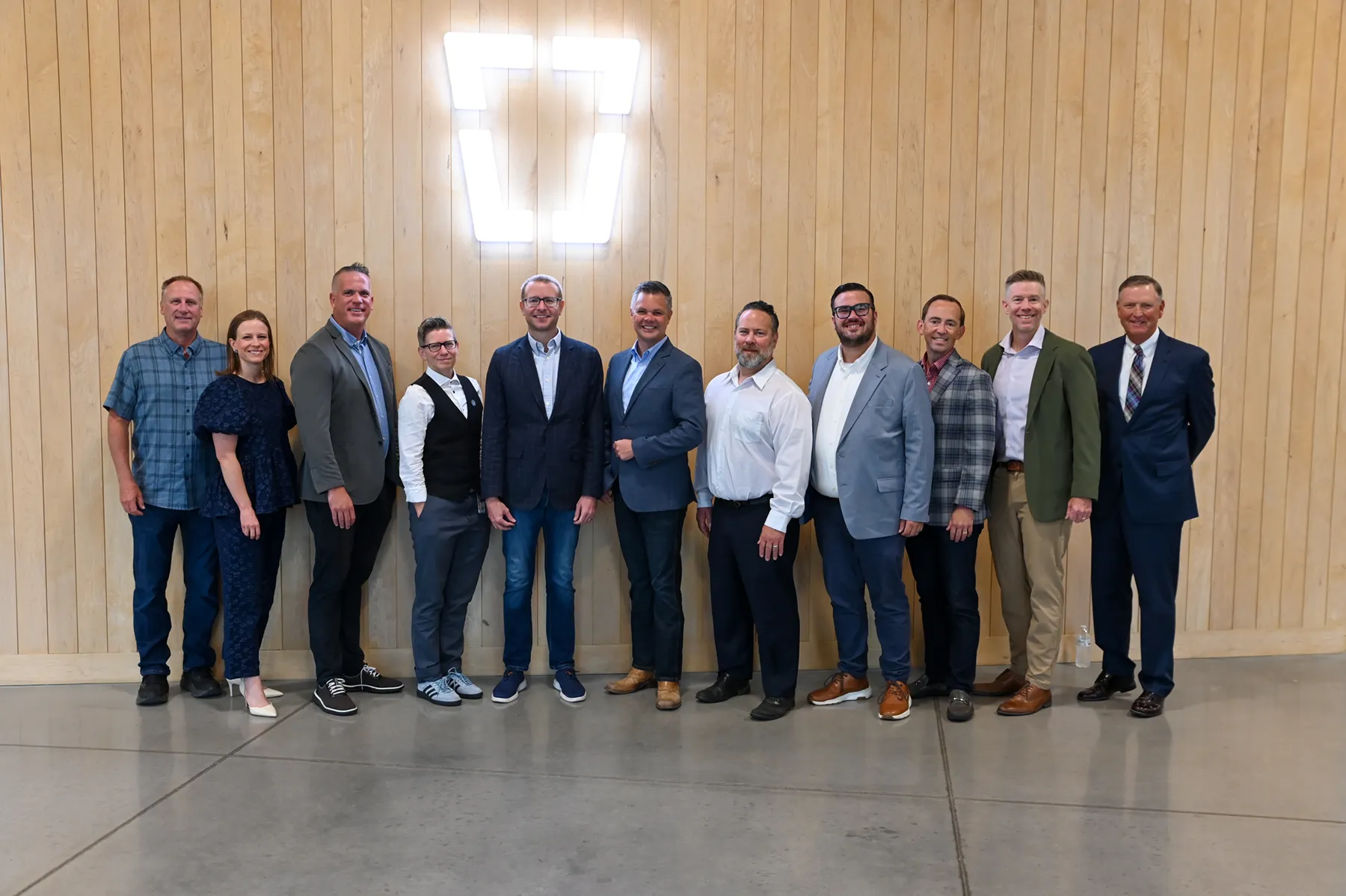
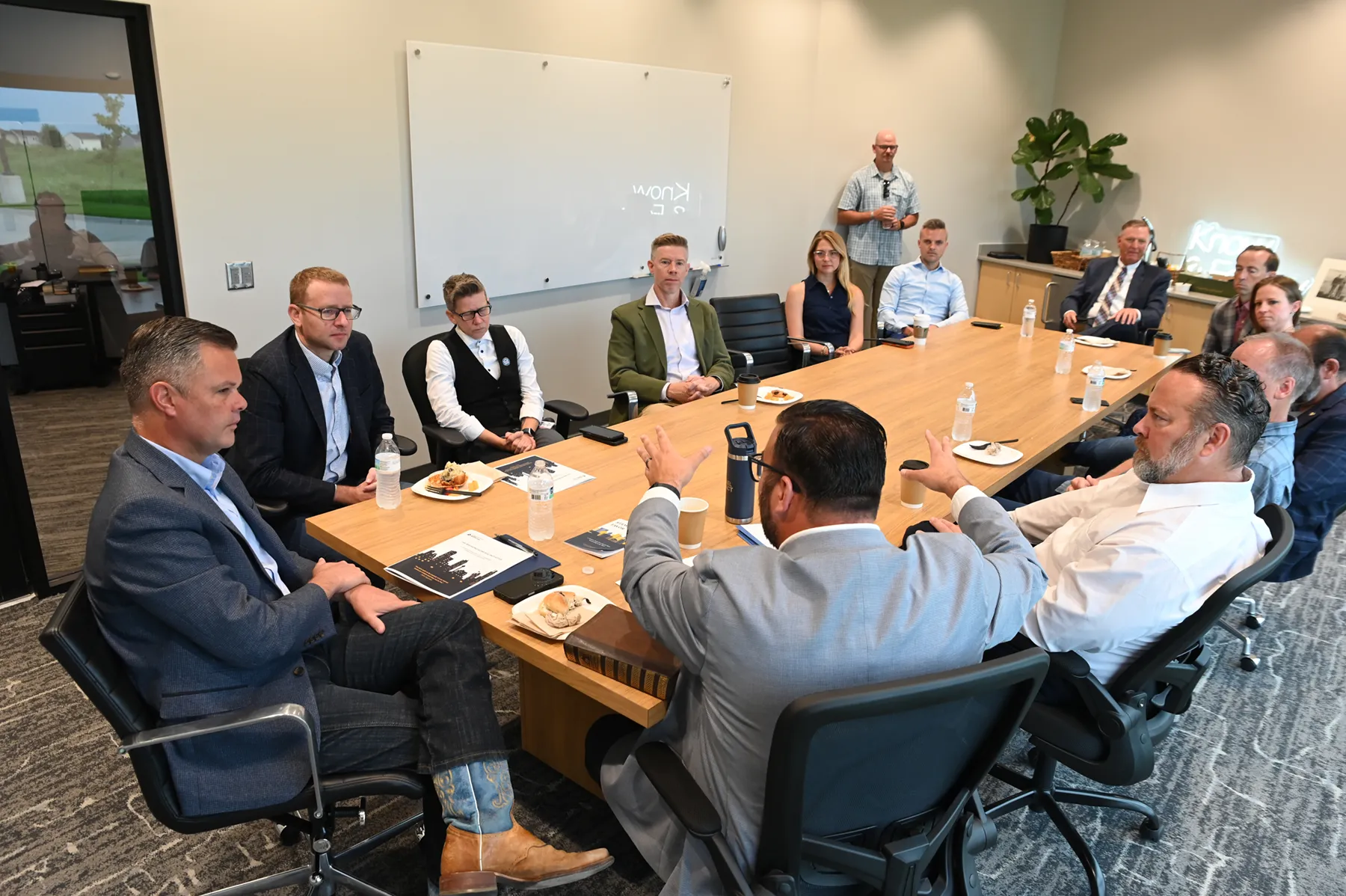
Speaking at a Church Ambassador Network event Tuesday morning at Keystone Church in Ankeny, a senior federal official told Iowa pastors and faith leaders that the state’s growing partnership between churches and government to strengthen families and care for children could become a model for the nation.
The Church Ambassador Network (CAN), headed by Founding Director Greg Baker, is one of The FAMiLY Leader’s signature programs. It connects pastors – “shepherds of the church” – with public officials and lawmakers – “shepherds of government” – to foster relationships, encourage prayer, and partner on community issues. It also works to convey that government and the church have different God-given roles but can – and should – work together to serve vulnerable people.
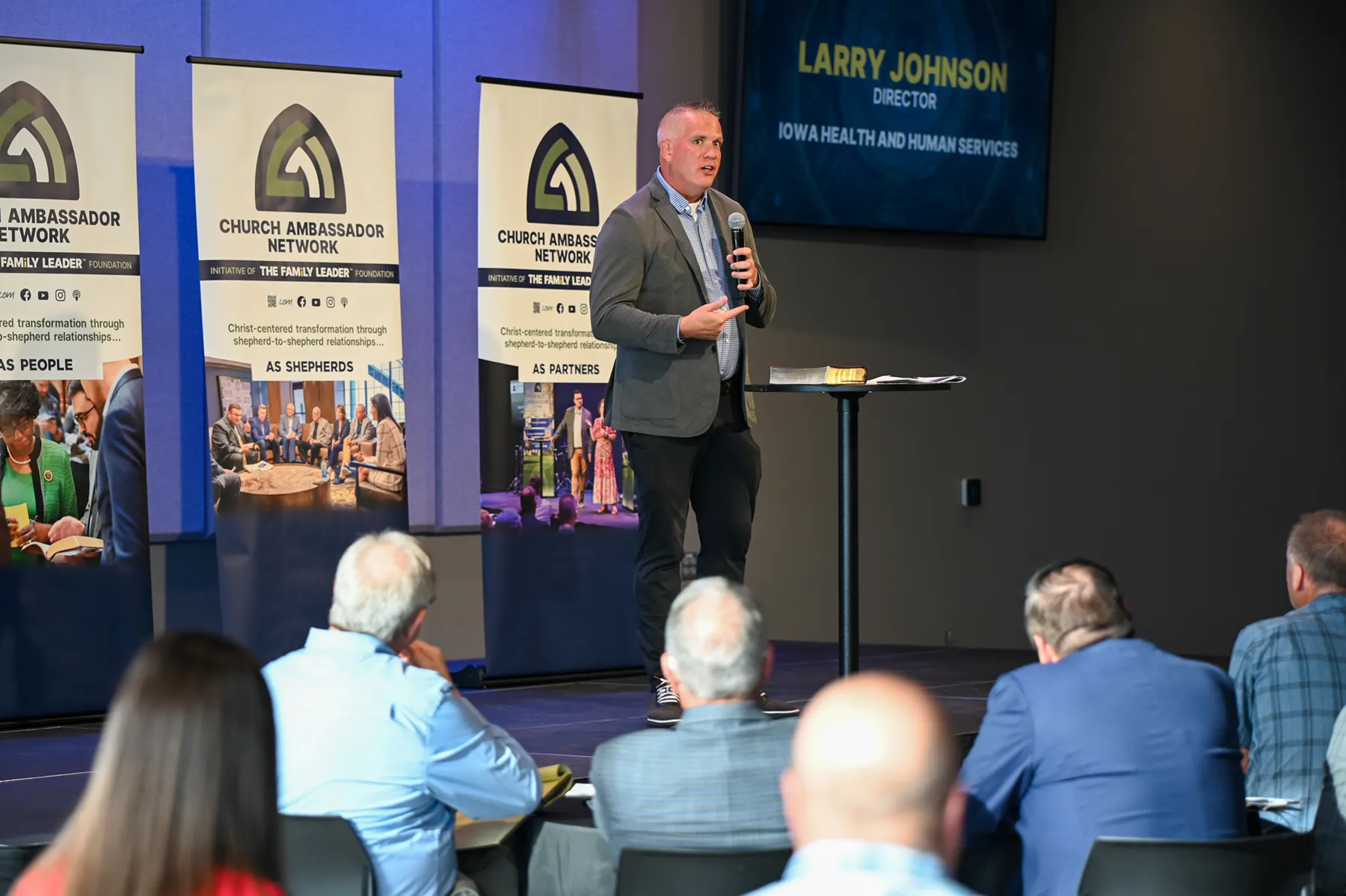
Alex Adams, assistant secretary of the U.S. Department of Health and Human Services Administration for Children and Families (ACF), joined U.S. Rep. Zach Nunn, Iowa Health and Human Services Principal Deputy Director Larry Johnson, the TFL’s leadership and about 75 pastors during the 29th stop of the Church-State Partnership Tour, which is focused on improving Iowa’s foster care system and increasing churches’ role in supporting vulnerable children and families.
Adams, who previously led Idaho’s health and human services agency, said Iowa is “setting the mark” in the message it sends to Christians who are willing to foster children and support foster families. He predicted that when the federal government begins publicly comparing state child-welfare outcomes this fall, Iowa could emerge as one of the nation’s leaders.
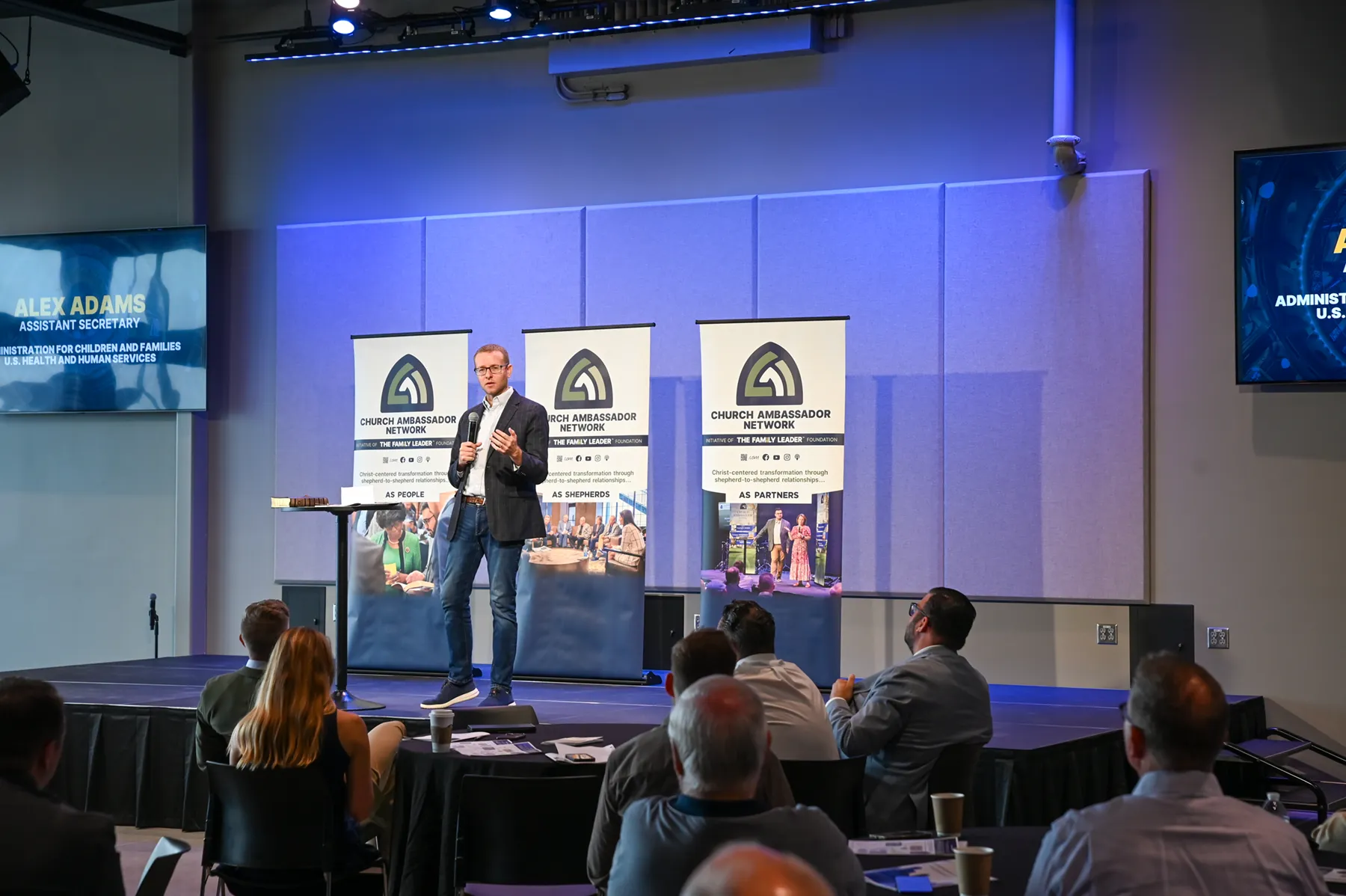
“I see you guys as a national model,” Adams told those gathered. “I appreciate what you’re doing, and I think very soon other people will as well.”
Pastor Brent Minter of Keystone Church set the tone by pointing to the biblical command in James to care for orphans and widows. Churches, he said, naturally respond when a vulnerable child within their congregations needs help. But many endangered children have neither a church nor a family able to intervene. “The first call that happens when a child is endangered is not to Keystone Church,” Minter said. “It’s to health and human services. It’s to child welfare.”
That reality, he said, makes government’s role essential while also creating an opportunity for churches and government to work together. “Because we both care for the vulnerable, we want to work churches and states together to solve some of these really complicated problems,” Minter said.
For Nunn, the foster care issue is far more than public policy; it’s personal.
He described how he and his wife, Kelly, became foster and adoptive parents after receiving a call about two young girls within their extended family who needed a home. Their journey exposed them to the complexities of the child-welfare system and, more importantly, the challenges children and families continue to face long after an adoption becomes final.
Nunn praised social workers, courts and others who helped his family, but said the larger community – particularly communities of faith – can provide the relationships and support government cannot. “Our two little girls, after three years of a lot of hard work, are doing really well,” he said. “But they’re doing really well because not just what Kelly and I have done; they’ve done very well because of what the community has done.”
Nunn, who serves as co-chair of the Congressional Foster Youth Caucus, said simply spending more government money is not enough. Instead, policymakers must identify approaches that produce better outcomes for children and families and then replicate them. He cited Iowa’s reduction in the number of children in foster care as evidence of progress achieved through cooperation among government, churches and community organizations. He also emphasized that adoption itself does not end a family’s need for support.
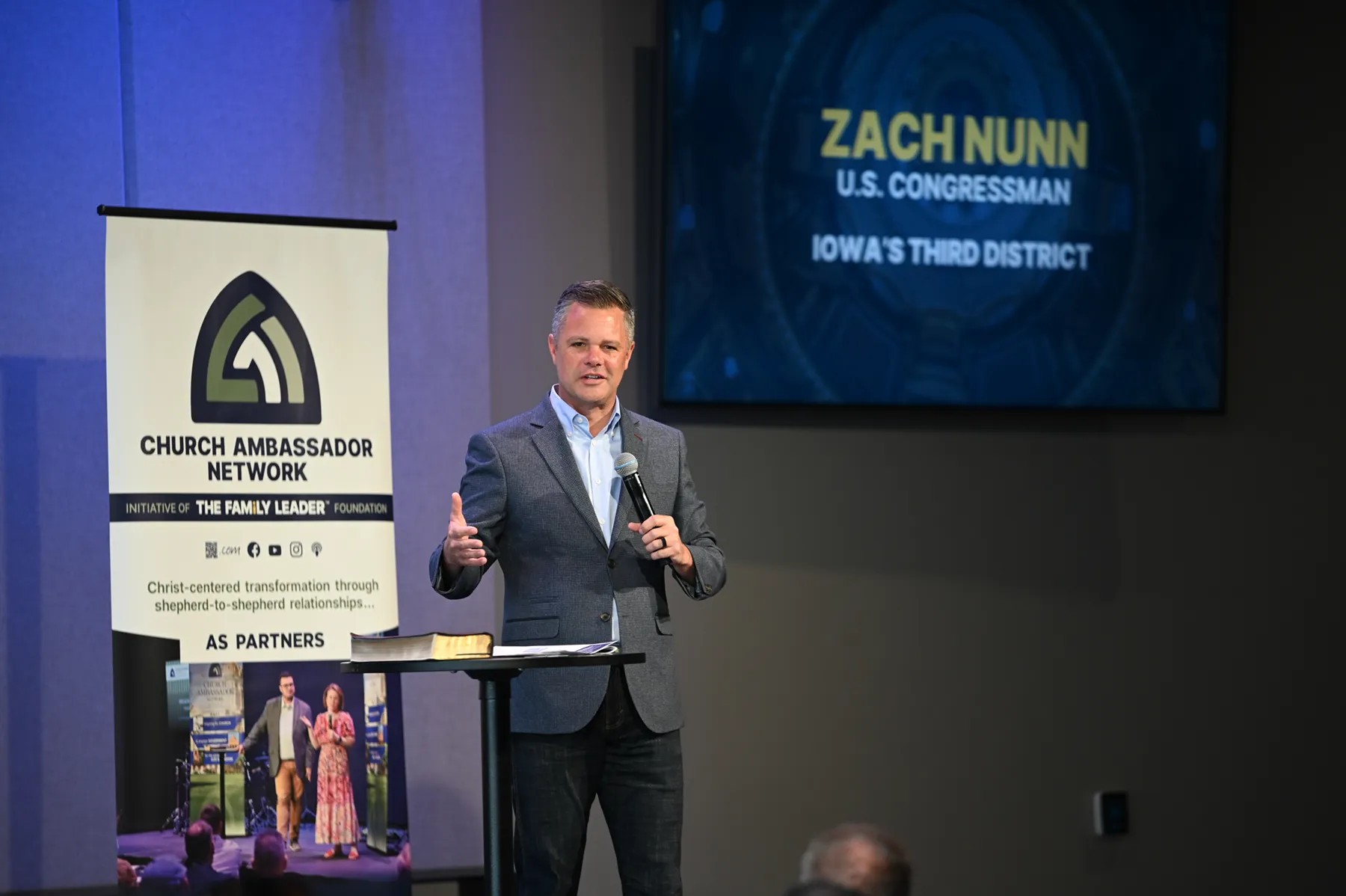
“Some of the hardest things happen on day two, three, year four, year 17 before they go off,” Nunn said. “That’s where I think a sense of community becomes even more prevalent to be a pathway for success.”
The answer, he said, is not to create more government programs, but to connect families with trusted community institutions. “Let’s pair with some of the best community leaders out there. That’s our leaders of faith,” he added.
While the event was the latest stop on a church-state partnership tour that began two years ago, Baker said the larger vision stretches back 12 years when The FAMiLY Leader began rethinking how Christians should engage government.
Rather than approaching elected officials only when legislation or political support was needed, Baker said CAN sought to care for government leaders by ministering to them first and then exploring opportunities for partnership. He noted that foster care has emerged nationally as perhaps the clearest opportunity for that model. He pointed out that churches across the country increasingly are exploring foster care ministries at the same time government officials — across political parties and state lines — are recognizing that government cannot meet every human need by itself.
“We can spend trillions upon trillions of dollars to fix broken systems, or we could start investing in people,” he said. “And investing in people requires investment in the physical and spiritual.”
But he stressed that the network does not advocate merging church and state: “God made the church and state separate. They are two distinct institutions given two distinct tools. He did not make them divorced.”
The goal, he said, is for those institutions to use their respective strengths to serve communities.
“These two institutions must labor together in the community for a community to thrive,” Baker said.
Baker said that possibility also brings responsibility. If Iowa is becoming an example others are watching, he said, Christians in the state cannot simply celebrate what has already happened. They must steward the opportunity, strengthen the partnerships and prepare to share what has been learned. And the evidence of success will ultimately not be found in programs, meetings or government reports, but in children who find safe homes, families that remain together and churches willing to step into difficult places.
‘We cannot do this alone’
Johnson said he took his approach to government – “modernize, standardize and simplify” systems while remembering that behind every government application, investigation or case file is a person – when he assumed his leadership role at Iowa’s Department of Human Services. That philosophy is guiding efforts to modernize Iowa’s child-welfare technology and speed up decisions affecting families.
The department now closes an unfounded abuse claim and issues a finding in 24 to 48 hours rather than taking up to 20 days but closing a government case does not necessarily mean a family no longer needs help, he said. That’s why the state has worked with CAN in developing a referral system through Thrive Iowa to connect families with community partners when government intervention is no longer warranted but needs remain — perhaps counseling, employment assistance or simply a supportive relationship.
The goal is to help families become stable enough that they do not return to the child-welfare system. “It’s a benefit for taxpayers. It’s a benefit for the family. It’s a benefit for the children,” Johnson said. “We cannot do this alone. We’d all be in trouble if government was doing this alone.”
‘Homes waiting on kids’
Adams first confronted a foster-care crisis while leading Idaho’s health and human services agency. Despite declining numbers of children entering foster care, Idaho also was losing foster homes. As a result, some children were being placed in hotels, short-term rentals and government offices.
Idaho began measuring its system according to a simple ratio: the number of available foster homes compared with the number of children needing them. The state also began to actively engage churches and the faith community in addressing the crisis.
When Adams took over, Idaho had approximately 74 foster homes for every 100 children in the system. By the time he left, the ratio had risen to 104 homes for every 100 children. Idaho eliminated placements of children in hotels, short-term rentals and government offices. “Every child deserves a family,” Adams said. “We said we will never, ever, ever place another child in those dehumanizing settings, and they haven’t.”
Adams said the Trump administration’s commitment to engage churches in federal efforts is a critical component of the ACF’s effort to reverse the current national ratio of 57 foster homes for every 100 children in the system. Churches can help change that equation by recruiting foster parents, supporting existing foster families so they remain in the system, helping to stabilize struggling biological families before children enter foster care, and providing adoptive homes and other pathways to permanency.
He noted that all 50 states have agreed to participate in the administration’s “Home for Every Child” campaign aimed at helping every state achieve a ratio greater than one foster home for every child needing placement. “We want homes waiting on kids, not kids waiting on homes,” Adams said.
ACF also plans an October launch of a public dashboard comparing states on foster-home-to-child ratios, placement with relatives, placement stability, repeat maltreatment and other measurements. Adams said the greater transparency, including monthly updates, should help states identify successful approaches much faster than traditional federal oversight based heavily on lengthy reports and paperwork.
And he expects Iowa’s church partnerships to attract attention. “My guess is that other states are going to covet what the Church Ambassador Network has done,” Adams said, and ask, “‘How is Iowa doing it? How can we replicate that in our states?’”
What’s ahead in central Iowa
The meeting also provided a glimpse of the next step in Iowa.
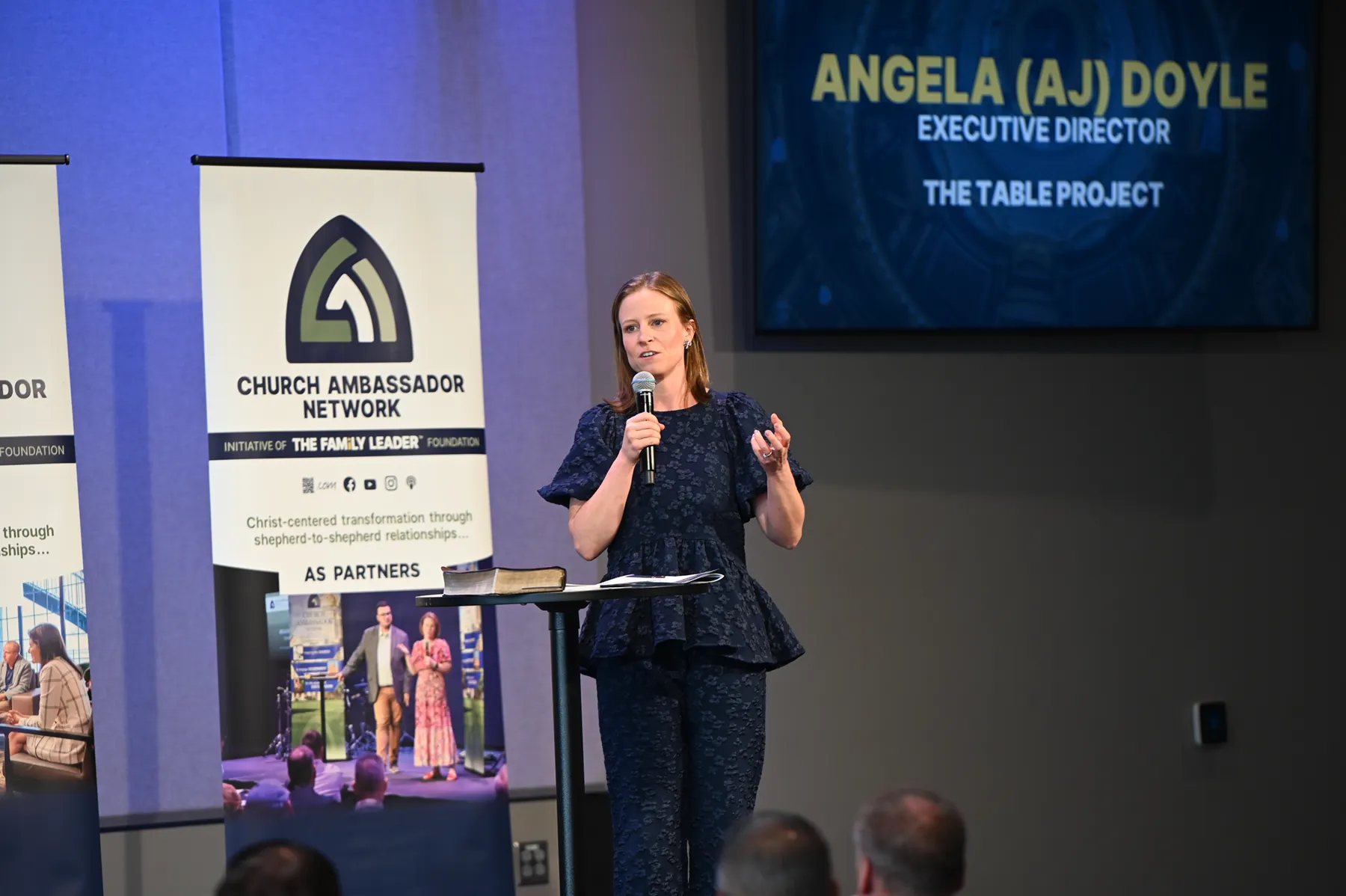
AJ Doyle, executive director of the Table Project, said the organization will launch its first Christian, gospel-centered foster-family training cohort in Polk County next month. Doyle said central Iowa currently has 441 children in foster care and 331 licensed foster families, leaving a significant gap between children needing homes and families available to receive them.
The Table Project seeks to recruit Christians who feel called to foster and provide them both the technical training required by the state and a theological framework for the work. While the project’s goal of 100 new foster families is ambitious, Doyle added, “All it would take is one per church.”
Training will include subjects such as attachment, trauma and navigating legal and child-welfare systems, but it will also prepare families spiritually for difficult moments. Just as importantly, the initiative is designed to surround foster parents with other Christians who may not be called to foster themselves but can help sustain those who are.
Doyle said friends and church members will be trained to form “care communities” of four or five families around each foster family. That support is especially important because half of foster families quit within 12 months.
“This is the difference the church can make in the space of foster care, because not everyone is called to foster, but everyone can do something,” Doyle said. “Foster care is a heavy and holy calling. Families need to be equipped as if it’s a calling. They need to be equipped as if this is a mission field to be sent into.”
The church as a transformative resources
The FAMiLY Leader President and CEO Bob Vander Plaats placed the willingness of current state and federal elected leaders to involve churches in tackling the foster-care crisis underscores why Christians must be committed to electing public leaders who recognize the church as a “transformative resource.”
“What if the Church of Jesus Christ really rose up and partnered with the institution of government to break bondage, to set the captive free, to be the answer to addictions, to corrections, to foster care, to marriage, to family, to everything?” Vander Plaats asked. “And when that happens, like it’s happened in the state of Iowa, what if that would be replicated all over the country?”